AI Governance Summer School in Bangladesh 2026
A five-day, in-person executive education programme, held in Dhaka from 29 August to 2 September 2026, that examined how artificial intelligence is reshaping law, public policy, institutions, work, and society, with a focus on the governance challenges and opportunities facing Bangladesh and the Global South.
- 5 days
- In-person
- 40
- Participants
Artificial intelligence is moving from the technology sector into courts, government, workplaces, education, healthcare, finance, and everyday public life. For Bangladesh, the challenge is no longer whether AI will be adopted, but whether it will be adopted in ways that are accountable, lawful, inclusive, and responsive to local realities. The AI Governance Summer School was created to build the knowledge needed to navigate that transition.
AI governance is shaped by questions of law, policy, institutions, rights, infrastructure, and power. It is not shaped by technology alone. Yet many global approaches to AI governance are shaped by countries with greater technological, financial, and institutional resources, and do not always reflect the realities of countries like Bangladesh. This programme examines those global debates through a Bangladesh and Global South lens, connecting international developments with the legal, institutional, economic, and social realities that shape AI adoption locally.
Over five days, participants worked to:
- 01Understand how AI is affecting institutional governance, regulatory practice, and public policy, in Bangladesh and internationally.
- 02Identify the main regulatory, ethical, and institutional challenges raised by the development and deployment of AI systems.
- 03Compare different national and international approaches to AI governance, including those of the EU, the United States, and China, and assess their relevance to Bangladesh's own context.
- 04Assess how AI governance choices affect fairness, accountability, data sovereignty, and economic opportunity, with particular attention to conditions in Bangladesh and the wider Global South.
- 05Examine how governments, regulators, international organisations, and private-sector actors are responding to the opportunities and risks created by AI.
- 06Analyse key debates around AI safety, explainability, bias, and systemic risk, and their institutional implications.
- 07Explore the governance challenges linked to AI in financial services, public administration, and manufacturing sectors central to Bangladesh's digital economy.
- 08Apply conceptual and policy knowledge to real-world governance questions relevant to Bangladeshi and South Asian institutions.
Five modules. Five days. From understanding AI to designing governance.
Understanding AI
What AI actually is, how machine learning and generative AI work, and what governance leaders need to understand about the technology shaping institutions and society.
AI Opportunities & Bridging Divides
What AI is already changing across jobs, economies, public services, and institutions. And who has the resources, access, and power to shape and benefit from it.
Safe, Secure & Trustworthy AI
Why societies govern powerful technologies, the principles and regulatory approaches emerging around AI, and who is accountable when AI systems make decisions or act with increasing autonomy.
Human Rights, Accountability & Global South Equity
What AI governance looks like from Dhaka, Lagos, or Santiago rather than only from established technology powers. And whose rights, interests, and voices governance frameworks protect.
Future Challenges & Policy Design
What should Bangladesh do next? Participants apply what they have learned to develop practical governance recommendations for emerging AI challenges in their own institutional or sectoral context.
Inside the programme
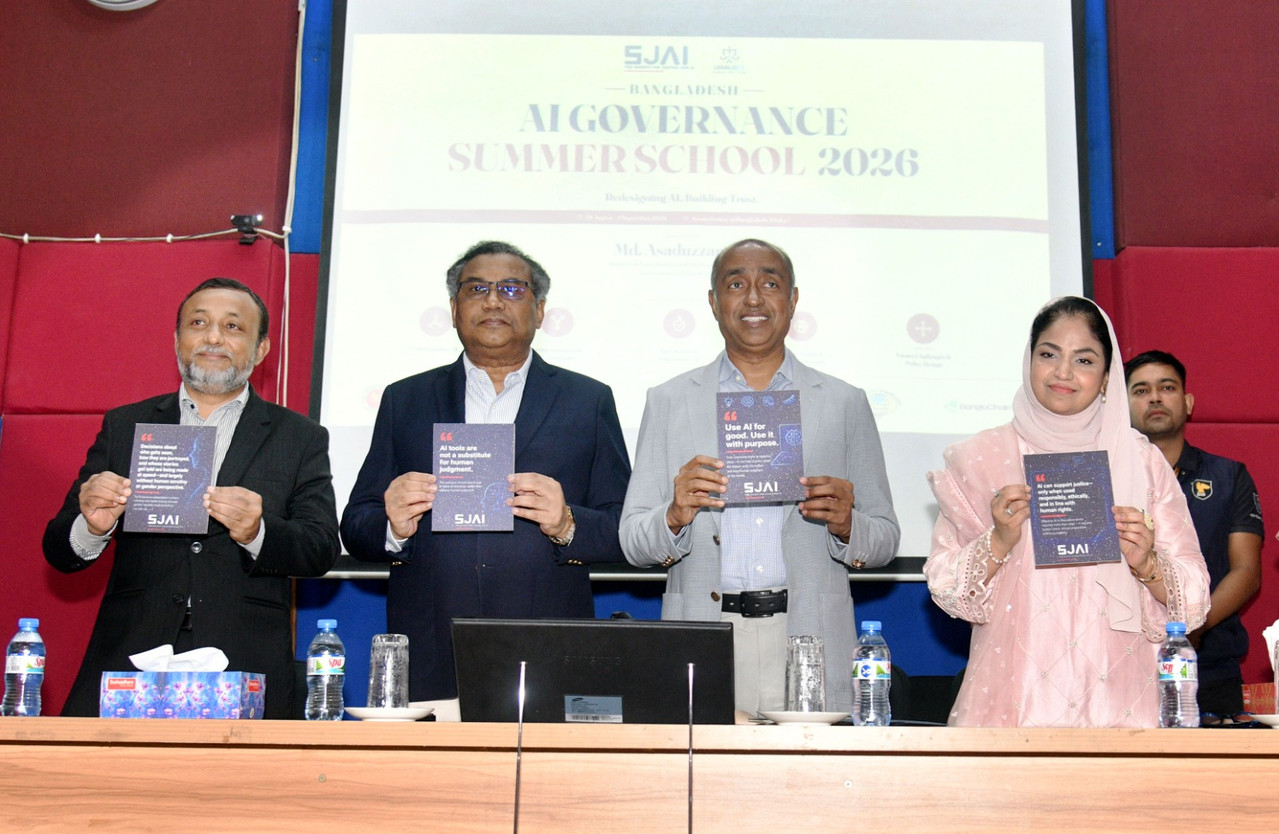

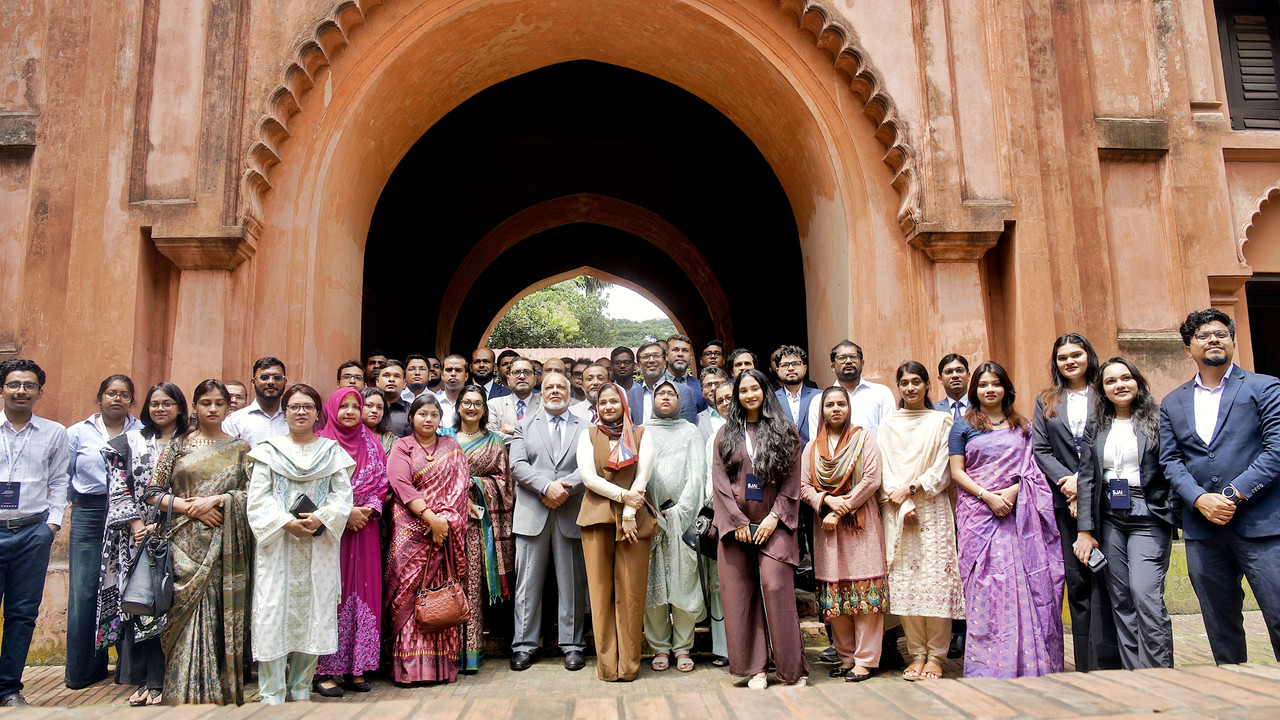
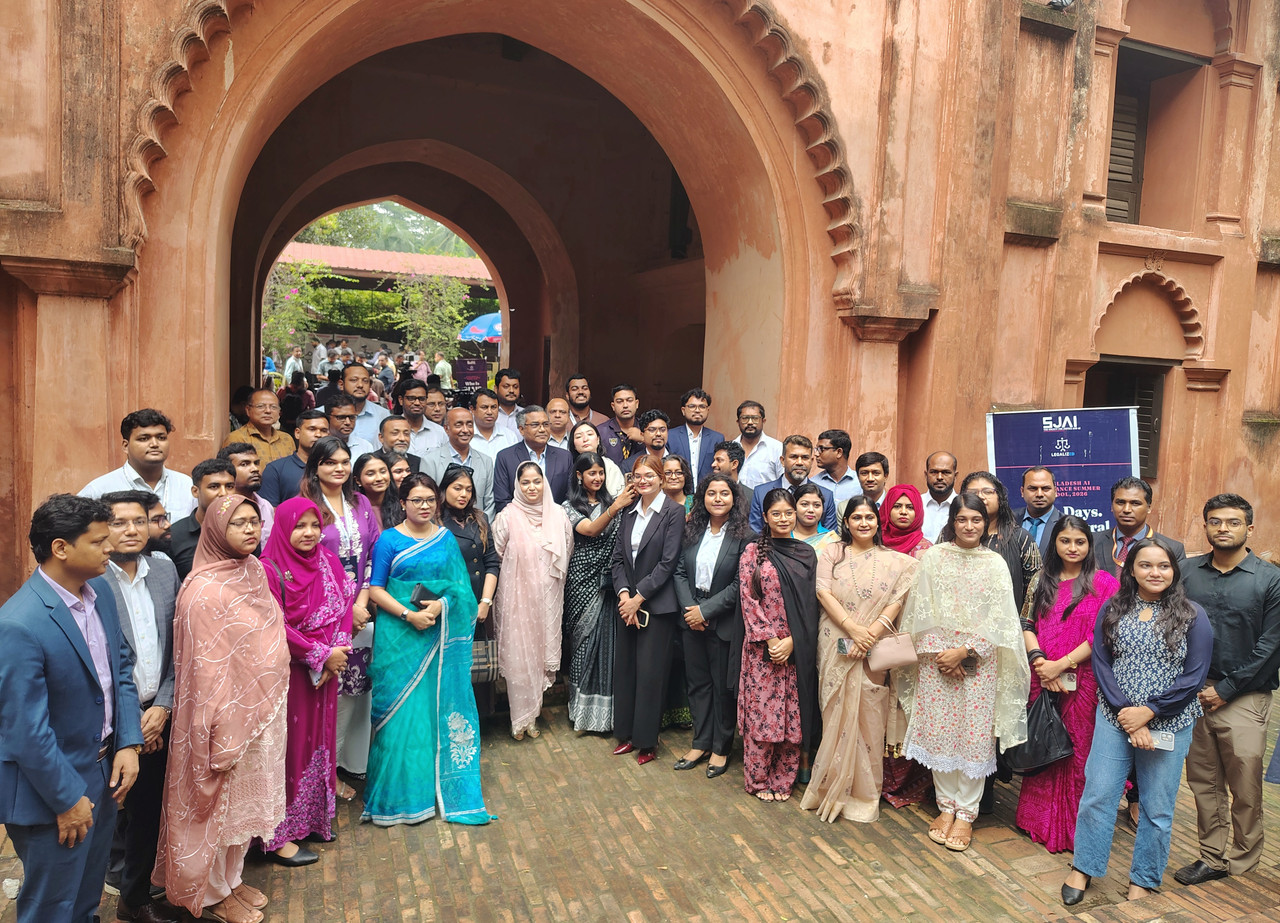
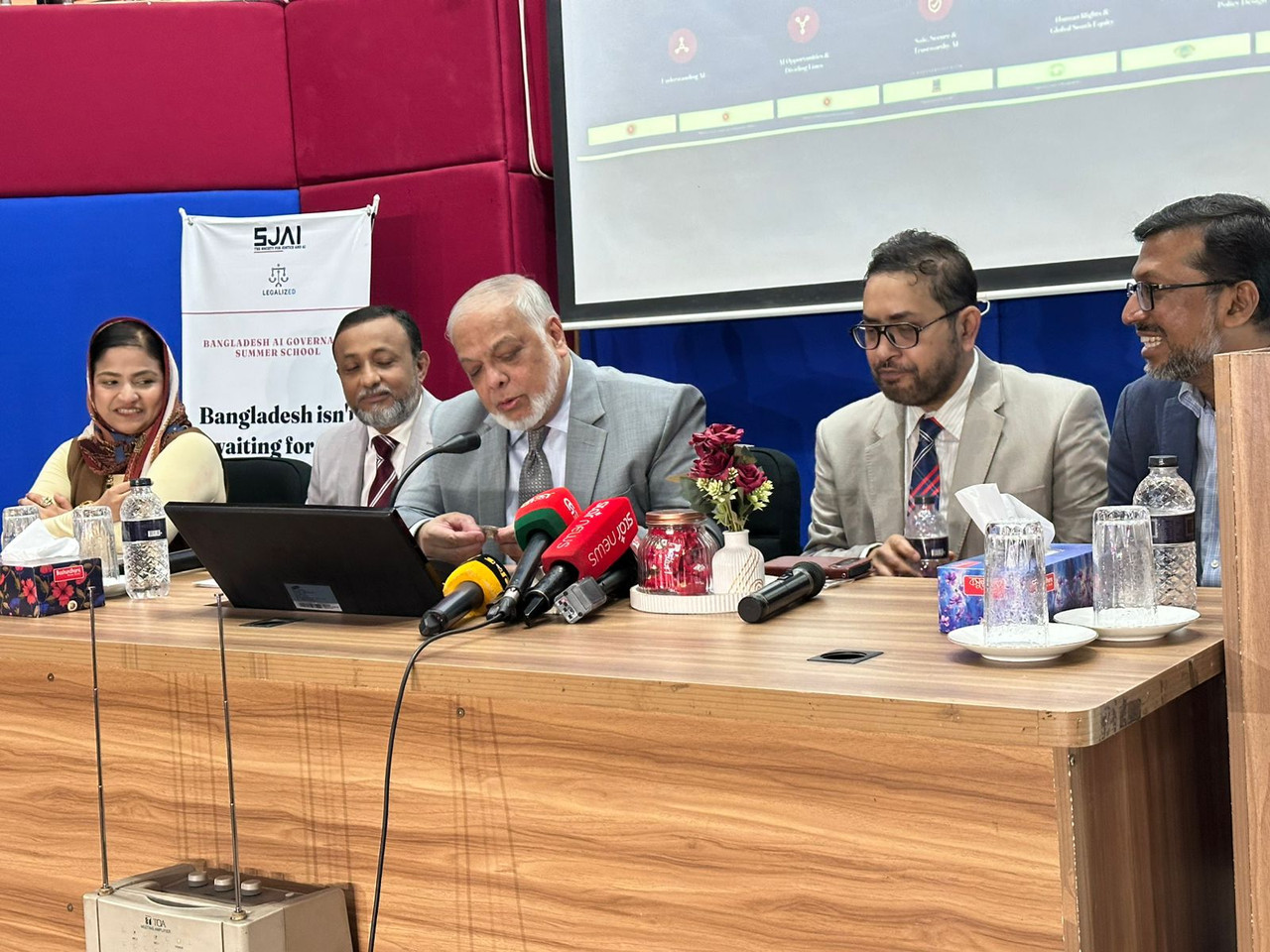
Leading Perspectives on AI Governance

Barrister Tasnuva Shelley
Deputy Attorney General, Office of the Attorney GeneralTasnuva Shelley is a legal professional and technology governance practitioner working at the intersection of law, AI, cybersecurity, and digital transformation. She serves as a Deputy Attorney General and is the Founder of Legalized Education Bangladesh Ltd., a legal-tech and civic-tech platform. She also serves as Programme Director of the AGO–UNDP Internship Programme and teaches Cyber Law and AI & Law at BRAC University.- QM
Qazi Bouland Mussabbir
CEO, AgroshiftQazi Bouland Mussabbir is the CEO of a venture-backed company building digital infrastructure for agricultural trade, finance, and supply chains. He has raised US$2.5 million from global investors and led the company’s evolution into an AI-enabled infrastructure platform connecting farmers, financial institutions, enterprises, and government.
- KM
Dr. Khondaker A. Mamun
Professor of Computer Science & Engineering at United International University (UIU)Professor of Computer Science & Engineering at United International University (UIU) and Founder and Director of the Advanced Intelligent Multidisciplinary Systems (AIMS) Lab, where he leads research on artificial intelligence and its applications in healthcare, disability, brain-computer interfaces, and education. - MS
Dr. Masrur Salekin
District and Sessions JudgeBangladesh JudiciaryDr Masrur Salekin is a District and Sessions Judge in the Bangladesh Judiciary with twenty years of experience as a judge, teacher, researcher, and lawyer. He joined the Bangladesh Judiciary in 2008, presiding over civil, criminal, and family courts, and previously served as Senior Legal Counsel with BRAC. He holds a PhD in Law from the University of Galway (thesis: "Judicial Pro-Activism and Collaborative Constitutionalism: Ensuring Environmental Justice in India, Ireland, and Bangladesh"), earned as a Hardiman Scholar, and completed an LLM in International Law and Development in 2009-10 as a Chevening Scholar at the University of Nottingham. He has taught as adjunct faculty at several Bangladeshi universities for over twelve years and currently serves as Editor-in-Chief of the Journal of Law, Policy and Justice and as an Adviser to the Bangladesh Society of International Law. His research interests include environmental law, governance, rule of law, constitutional law, human rights, and economic law. - MR
Dr. Md. Riaduzzaman
Associate Professor of Law at Daffodil International UniversityAssociate Professor of Law at Daffodil International University. He holds a PhD from the University of Dhaka and researches the intersection of constitutional rights, privacy, data governance, and emerging technologies in Bangladesh.
Presentations and briefings
What our fellows say
AI governance is crucial to guide AI on the right track, especially in the justice sector. To utilise the full potential of AI, we should have a policy to demarcate the areas of what to do and what not to do. Without a policy framework, AI can bring negativity along with its huge positivity.
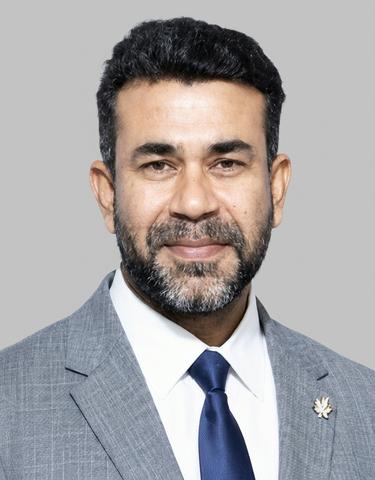 Md. Ziaur RahmanDistrict & Sessions Judge , Bangladesh Judicial Service
AI governance is the foundation of an ecosystem that ensures powerful autonomous systems remain aligned with human safety. As an industry practitioner, I believe building this capacity now is what will ensure AI serves our national priorities.
 Mahbuba Yesmin TurabaFounder and CEO , MindSpark
One of my strongest takeaways from the Summer School is that AI governance is ultimately about people, power and participation. For Bangladesh, the real test will be whether AI can strengthen inclusive and democratic institutions, protect pluralism, and support peaceful coexistence rather than deepen exclusion, polarisation and mistrust.
 Ratul DevFounder and Executive Director , GenLab
The Summer School helped me understand AI governance as a multidisciplinary field connecting technology with law, public policy, human rights, ethics, and accountability. The sessions on law-making, platform governance, and Meta’s policies were particularly valuable for me.
 Mou DasMedia and Communication Professional
Responsible innovation requires both humility and courage, and the SJAI summer school reinforced the idea of engaging diverse perspectives on technology and society. Interdisciplinary approaches from law to computer science to philosophy were inspiring to understand the importance of ethical reflection and public accountability of the evolution of technology in our time.
 Ishrat JahanTech Researcher
Convened with
The programme was delivered with universities, institutions and industry practitioners.